

PACKING A PUNCH: An interview with Queer Brewing
We caught up with Cumbria-raised Beth Hill — Account Manager at Queer Brewing, the UK’s first queer and trans-owned brewery — to talk about brewing beers and boosting LGBTQIA+ visibility.
We caught up with Cumbria-raised Beth Hill — Account Manager at Queer Brewing, the UK’s first queer and trans-owned brewery — to talk about brewing beers and boosting LGBTQIA+ visibility.
Hi! Please can you introduce yourself and anything you’d like to share about how you identify?
Beth: Hello, my name is Beth Hill, I am a 31-year-old queer woman born and raised in Carlisle, Cumbria. I moved to London in 2013 (I feel old!) and I am the UK account manager for Queer Brewing.
Tell us about the Queer Brewing Project! How did the idea come about and how did you end up in your role there?
Beth: I’ve been a big fan of Queer Brewing since Lily (Waite-Marsden, Queer Brewing founder) started the project back in 2019. Due to recognising a lack of LGBTQ+ representation in the beer world, she set out to take up space in an industry dominated by cisgender, heterosexual male voices. I’d already been a brewery sales rep for almost 5 years with a multitude of breweries when I heard whispers of Queer Brewing hiring a replacement salesperson. I emailed my CV and zealous cover letter over and after an interview in a pub, I was offered the job. I was thrilled, it felt like all my previous experience led me to this moment. I’ll have been with the team for 2 years this October and I’ve never looked back. We give 10p of every can and pint sold to UK LGBTQ+ charities and institutions on a quarterly basis nand we’ve donated tens of thousands pounds back to our community, which is very close to my heart.
What’s your experience been like as a queer-led business in the brewing world?
Beth: Mostly good, I pick and choose where and whom I want to work with. You do get the odd comment like “‘Queer’ has a lot of history”, or “What makes it gay/queer?”, or “Will it turn me gay?!”—or even venues not taking us on, because they believe the beer won’t sell because it’s “queer”. However, getting to know all the wonderful people behind London’s indie LGBTQ+ bars and more so nationally, as well as like-minded people all over the UK is a dream.
You grew up in Carlisle. What was life like for you growing up as a queer person in Cumbria? Have you noticed any changes over the years?
Beth: Yes, I did indeed. I remember growing up and “gay” being used as an insult or something you would use as a bad descriptive. I had tough times that I won’t go into a lot (all is good now). I really feel for younger queers who didn’t get a chance to experience Outrageous; not that it was the best or the most trendy gay bar, or even that it was a haven without harassment, but for the fact that it was a pillar in the Cumbrian LGBTQ+ community, where I found I could be myself openly when I felt I couldn’t be at home or at Sixth Form, and meet people around my age who were LGBTQ+, some of whom are my best friends to this day. Since its closure in 2019, nothing has yet popped up in its place, contributing to the partial death of Carlisle’s night life.
Queer Brewing Project organises a lot of queer space events in London, can you tell us a bit about them?
Beth: It’s so, so varied, but my favourite was our launch of our cosmopolitan sour, Pink Pony Club, at Goldie Saloon. The first 50 people that came dressed in cowboy attire got a free can, it was a riot!
We are dead excited to be co-hosting an event with you in April in Carlisle! Can you let the readers know what to expect?
Beth: Lots of new beers from our brand spanking new brew kit! Expect lovely keg beers, beautiful casks, and our widely loved alcohol-free beer, along with 2 fantastic and queer and Cumbrian punk bands! The Drovers Rest will be bouncing for sure, I can’t wait!
What drinks will be there? Do you have a fave?
Beth: We have a few new cask ales in the production plan that I’m very excited about; our alcohol-free pale Bold, as mentioned above, and our flagship pale ale (that’s gluten free!) Existence As A Radical Act—my personal favourite!
There has been an increase in sober events over recent years, how does a brewing company respond to that? (I’ve actually had one of your alcohol free beers at Kittchen, it was DELISH)
Beth: In February, I went to a “Queers Without Beers” event at Club Soda in London, and it was super eye opening to hear a backlash of their experience of going sober. There’s a lot of pressure in queer spaces to be excessive with drinking or other, and it’s absolutely vital that queer spaces offer all forms of excellent beverages; it’s none of your business why someone is opting out of alcohol. Bold, our alcohol-free pale, was made with that in mind; a flavoursome beer reminding you to be the slamming queer you are, without the need of alcohol.
If you were a queer beer, how would you describe yourself to a potential punter?
Beth: Oof. Mine would be “well aged blonde with a strong bite and plenty of fizz.” Or a flavoursome table beer; small, yet packs a punch!
We have seen a lot of queer venues be closed down over the last 20 years, including Outrageous in Carlisle, what are your thoughts on that?
Beth: 14 years of austerity, Brexit, and Covid have had a huge toll on our country as a whole. I’ve seen queer spaces in London shut but many pop up in their place, so all hope is not lost. Someone soon, I hope, will do the same for Carlisle. While you see Rewind opening its doors, and places like the Kittchen and The Brickyard providing queer nights for our community, the need is there for more.
Any chance of the first Queer Brewing pub in Cumbria?
Beth: God yes—if I win the Euro Millions!
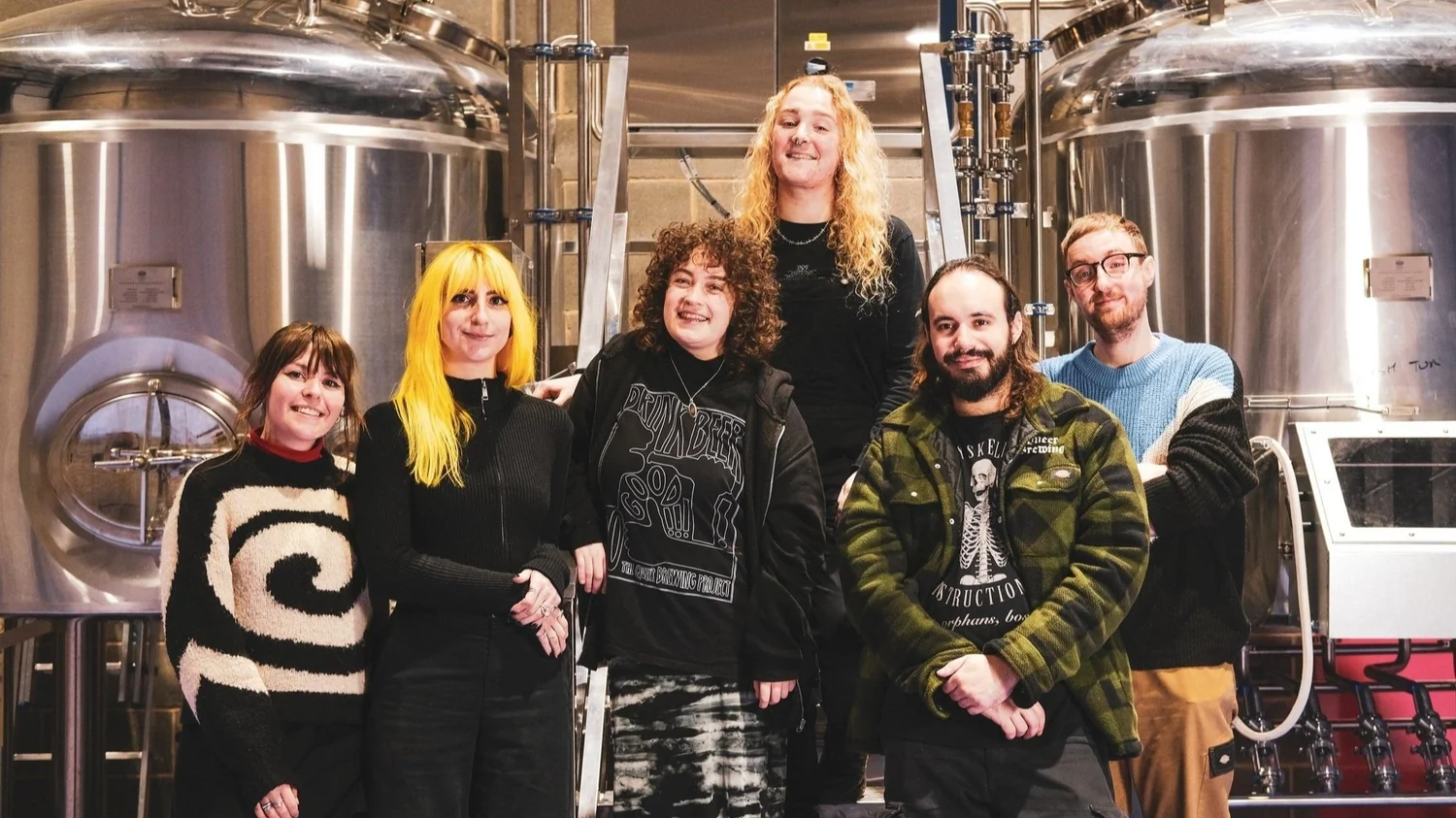
To find out more about Queer Brewing, including events you can attend, go to www.thequeerbrewingproject.com
LATEST POSTS

THE OZ TRIALS
How an underground magazine ignited a UK-wide battle for queer expression, youth culture, and the right to dissent. Read More


